


Most people don’t quit because of one bad day. They quit because of a pattern that repeats quietly: a small moment of pressure, a small boundary crossed, a small feeling of “this isn’t actually about the work.” Over time, those moments stack up.
I’ve been thinking about this as a continuation of last week’s idea—how proactiveness can quietly turn into anxiety. This week I noticed something underneath it: sometimes the anxiety isn’t coming from the workload. It’s coming from the way pressure is applied.
🚀 Feature Ideas (The Main Story)
A simple example: you’re about to go on leave, you’ve already made plans, or it’s clearly outside working hours. Then a request arrives that’s framed as “quick,” but carries a weight that isn’t said out loud:
“Can you just finish this before you go?”
“Can we do a quick call tonight?”
“This needs to be done—otherwise we’ll have to rethink things.”
Sometimes the request is legitimate. Things break. Deadlines are real. Teams depend on each other. That’s the grey area.
But I’ve noticed there’s another category of urgency—one that appears late, stays vaguely defined, and seems to exist mainly because a boundary exists. The conversation isn’t really about what’s most important. It’s about whether you’ll bend.
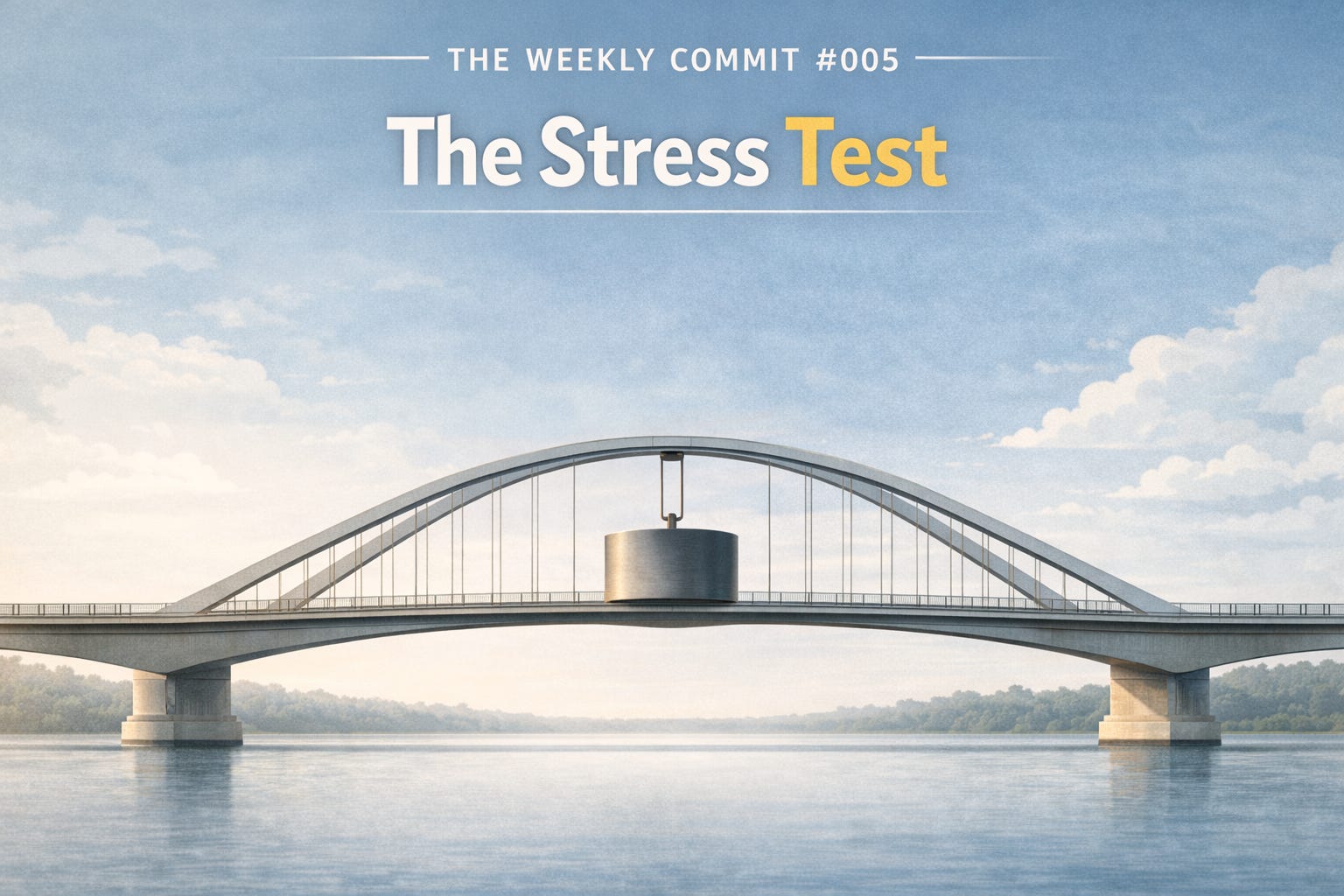
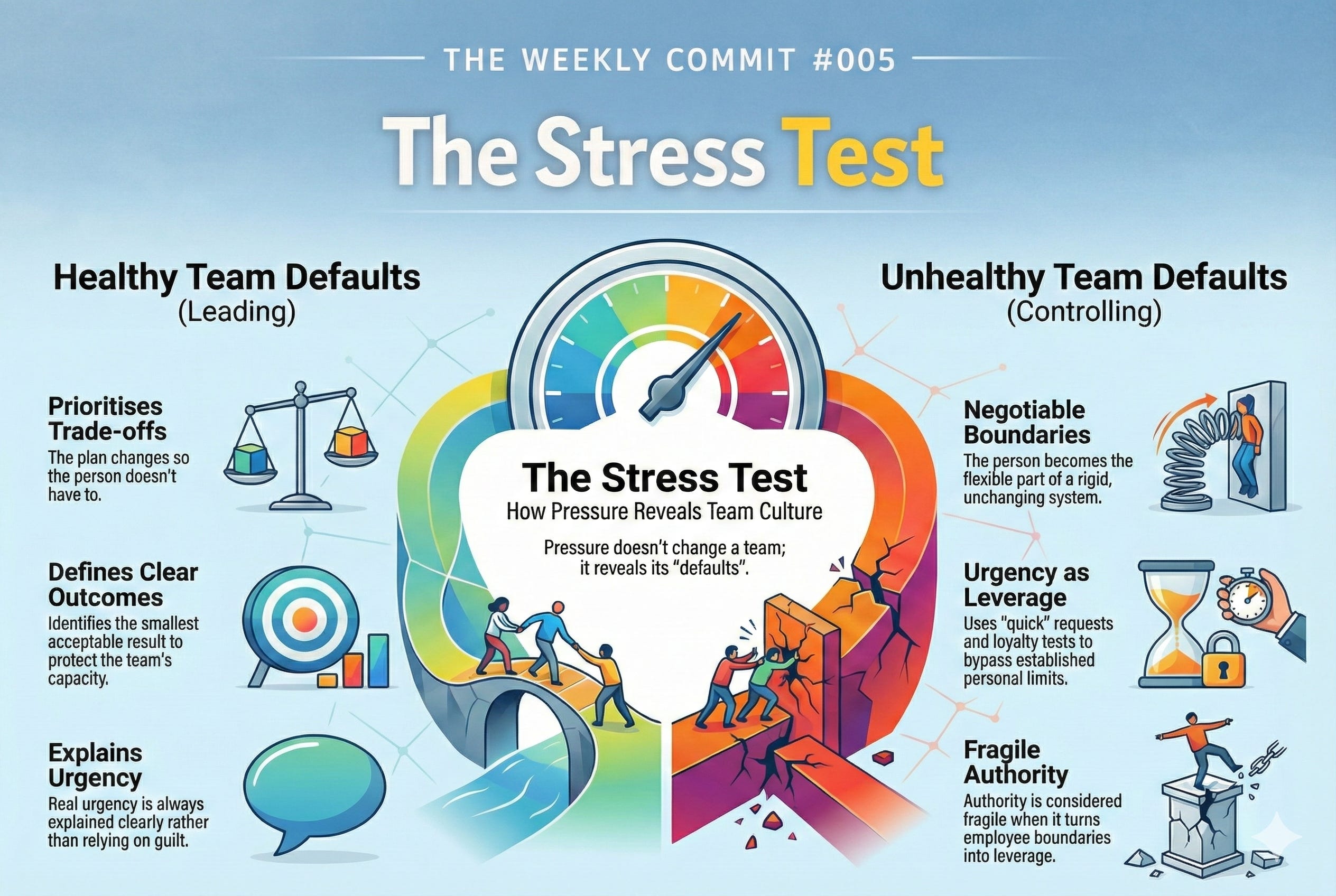
That’s why I think of these moments as a stress test. Not because they reveal who is “good” or “bad,” but because they reveal what the system defaults to when reality pushes back.
In a healthy team, pressure leads to tradeoffs. Someone says: “Okay, what do we drop?” or “What’s the smallest acceptable outcome?” or “Who owns this while you’re away?” The plan changes so the person doesn’t have to.
In an unhealthy team, the plan stays rigid—and the person becomes the flexible part of the system. Boundaries become negotiable. Urgency becomes a tool.
Often it’s dressed up as virtue: “ownership,” “hard work,” “team player,” “the company pays you.” That language can be true in the right context. But when it’s used selectively—only when it benefits the person applying pressure—it stops being accountability and starts becoming leverage.
The cost isn’t always visible immediately. Sometimes you comply, deliver, and move on. But repeated boundary-testing creates a background stress. Some people can shrug it off. Others carry it more deeply—replaying conversations, second-guessing themselves, staying on edge for the next “quick request.” Often it’s the conscientious, high-ownership people who absorb the most quietly.
And eventually, some of them leave—not because the work was too hard, but because the environment made every boundary feel like a negotiation.
So I’m holding onto two lines this week—not as a moral judgement, but as a diagnostic:
Boundaries reveal whether someone is leading… or controlling.
The clearest sign of fragile authority is when it turns your boundaries into leverage.
If urgency is real, it can usually be explained clearly. If it depends on guilt, vague pressure, or loyalty tests, it rarely is.
Pressure is inevitable. What we do with it is the design.
🐛 Bug Fixes (Life/Work Hacks)
Bug: Treating pressure like it automatically outranks boundaries.
When something is framed as “urgent,” it’s easy to assume you have only two choices: comply, or look irresponsible. But there’s a third move that keeps things professional and reduces drama: turn pressure into a decision.
Fix: Ask for the constraint + the tradeoff. You’re not refusing—you’re forcing clarity.
A small set of questions is usually enough:
“What changed that makes this urgent now?”
“What’s the minimum acceptable outcome?”
“What should I deprioritize to make room for this?”
If the urgency is real, these questions help the team coordinate better. If it’s manufactured, the vagueness shows up without you having to accuse anyone.
Leadership note to self: if I’m ever asking someone to bend a boundary—stay late, cancel leave, shift plans—I owe them two things: a clear reason (what actually breaks) and a clear tradeoff (what we’re changing so the cost isn’t silently dumped on them).
🧠 Raw Dump / Scratchpad
Accountability is consistent. Leverage is selective.
When the plan can’t flex, the person becomes the flex.
If it’s truly urgent, it can be explained clearly.
Compliance is not ownership.
Curious if you’ve seen this pattern too — and what you’ve found helps when boundaries start turning into leverage.
On to the next commit.


